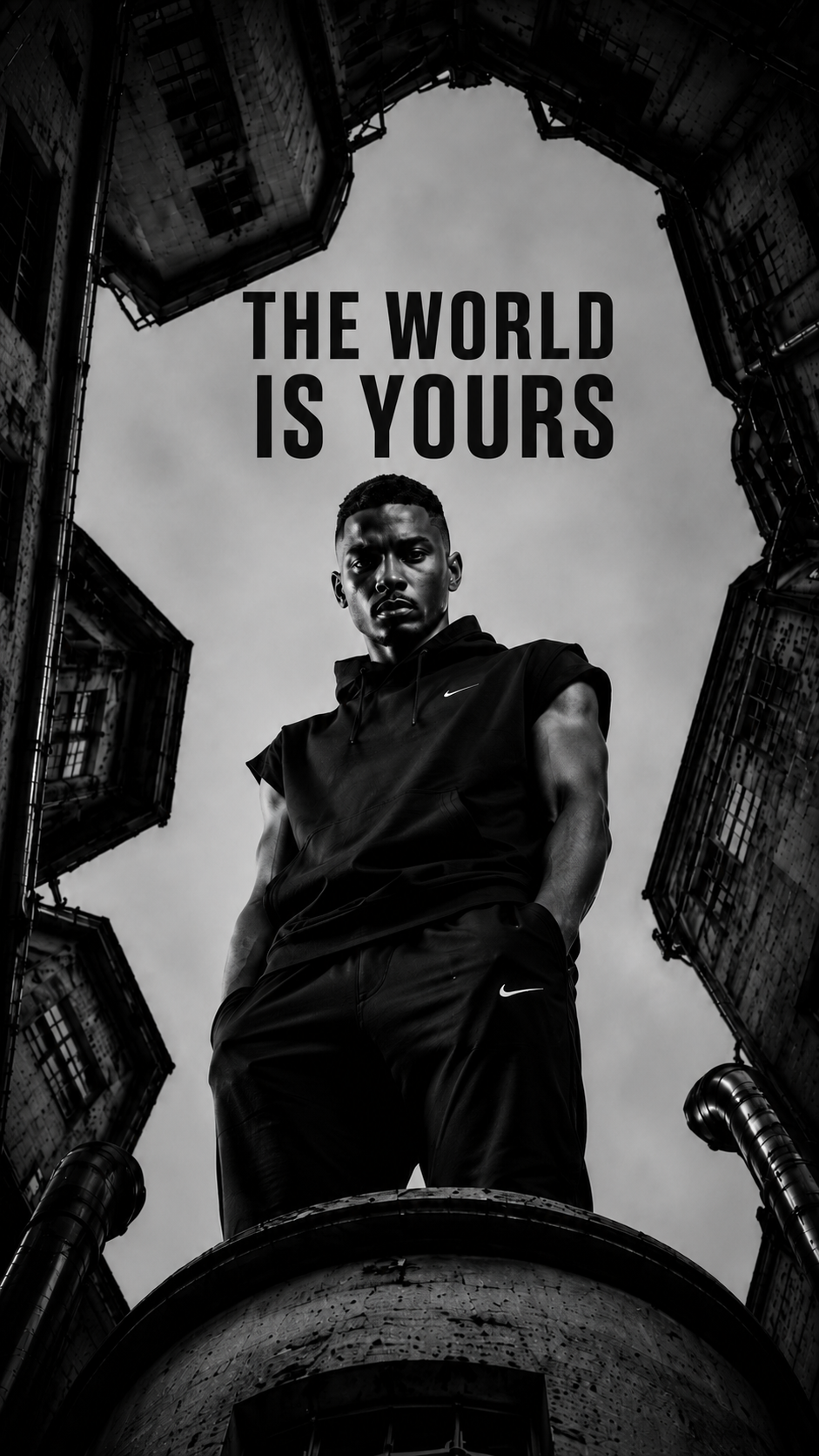
01
Pressure can bury identity
Young athletes are navigating economic uncertainty, social comparison and environments that can make potential feel distant or invisible.
A campaign about the moment pressure stops defining you—and movement helps you remember who you are.
What appears to be burying you may be the pressure that reveals who you were always capable of becoming.
There was a period in my life when every attempt to move forward seemed to push me backward.
The future felt distant. The pressure around me felt larger than the person I believed I could become.
During those moments, Nas’ “The World Is Yours” became a reminder that my circumstances were not the final image—and that I could not let pressure make me forget who I was.
That experience became the campaign philosophy: pressure may weigh on the senses, but the human spirit keeps going.
Before the applause, contract, podium or proof, there is a private moment of recognition: this pressure is real, but it does not get to define me.
Young athletes are navigating economic uncertainty, social comparison and environments that can make potential feel distant or invisible.
Nike has the credibility to speak to the moment a person stops seeing themselves through circumstance and begins moving from a deeper sense of who they are.
The architecture reflects the athlete’s internal state: first overwhelming, then clarifying, and finally revealed as something they can rise above.
This should not pretend to be every Nike campaign for every sport. Its first expression belongs in the urban categories where architecture, style, movement and cultural identity already intersect.
The strongest home for the campaign’s city language, style, attitude and culture-first storytelling.
A natural extension where pressure, court identity and city mythology shape the athlete’s world.
A more character-driven, defiant interpretation centered on individual presence, legacy and cultural authority.
The camera journey mirrors the athlete’s inner journey: pressure creates distance, movement restores clarity, and clarity helps them remember their position.
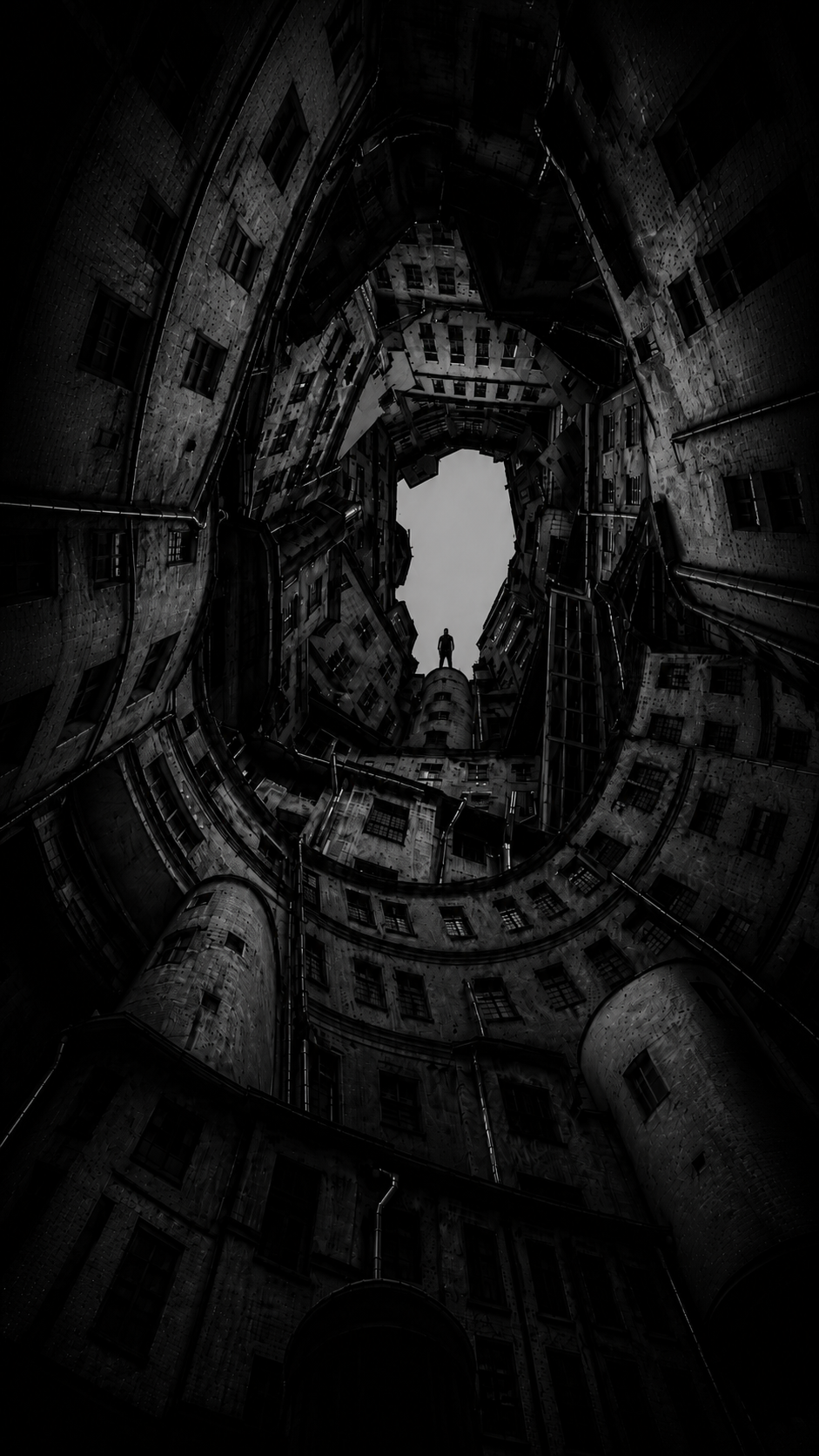
The athlete appears distant and nearly buried by dark, towering architecture. Their potential still exists, but pressure has made it difficult to recognize.
The camera begins moving forward. Nothing has changed externally yet. The athlete has simply refused to let circumstance deliver the final definition.
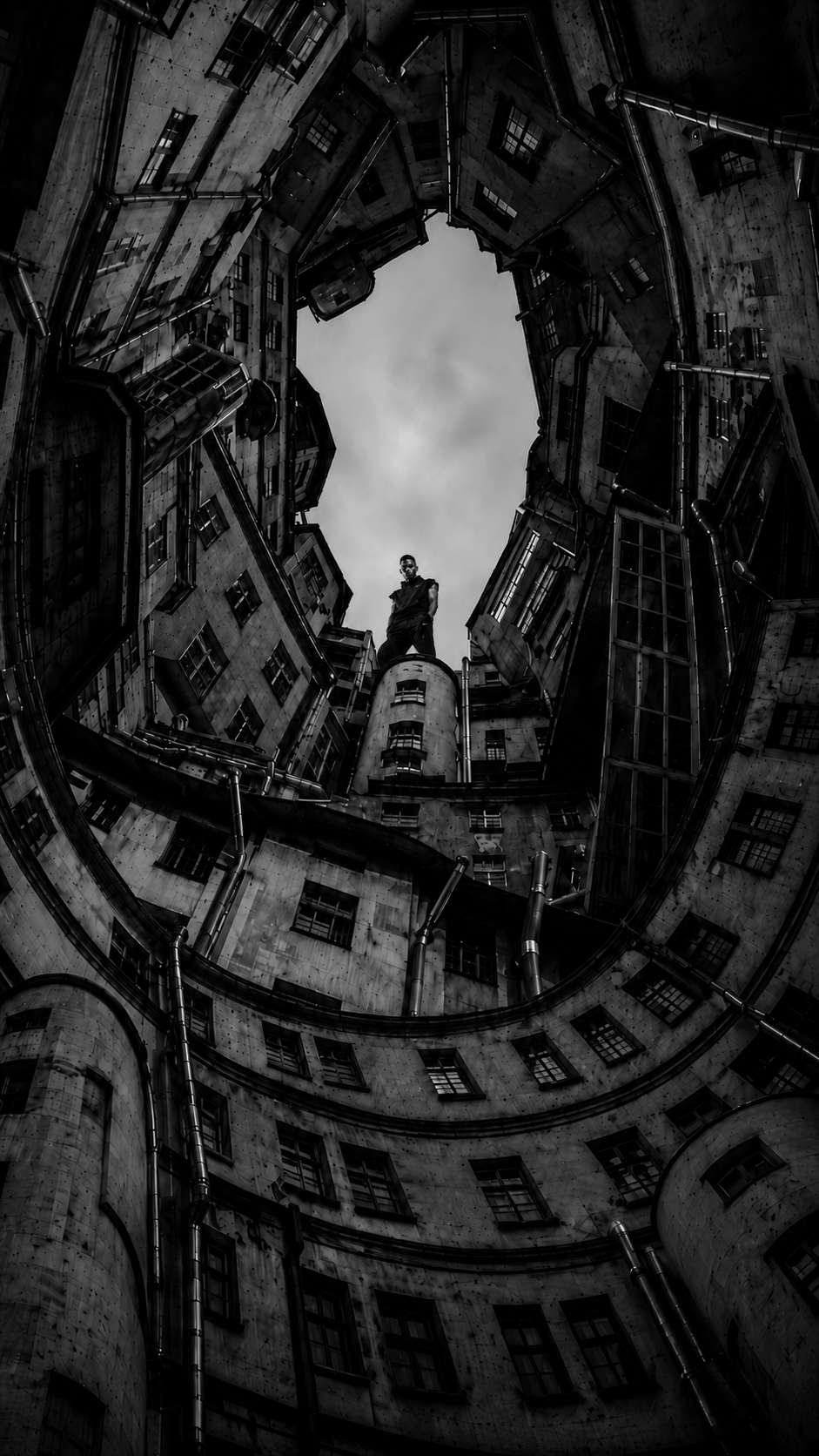
The architecture separates into layers. Darkness gives way to detail. The athlete’s strength was not newly created—it was brought back into view.
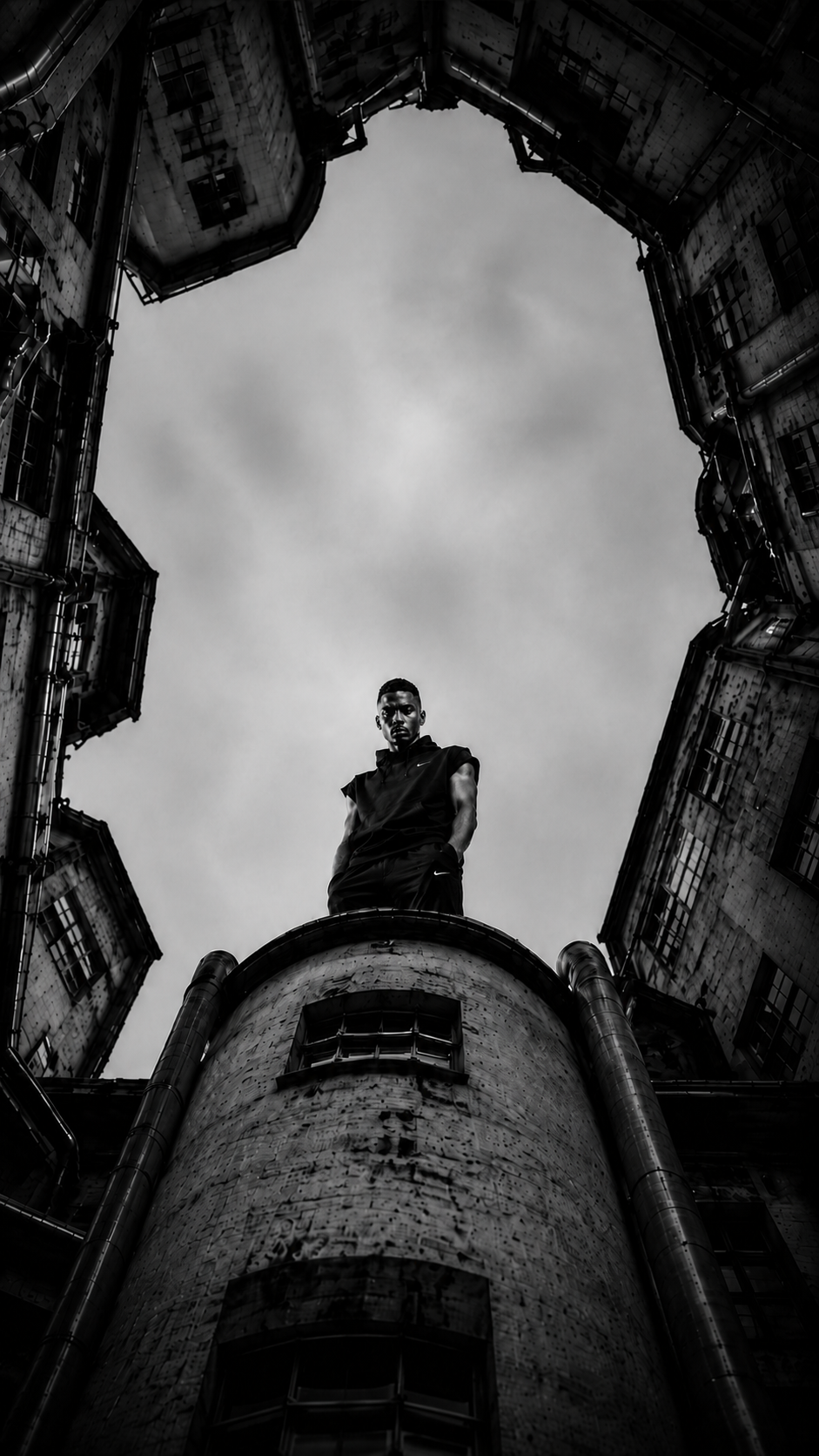
The perspective reverses. The athlete is not defined by the pressure around them. They are revealed above it, moving from a recovered sense of identity and purpose.
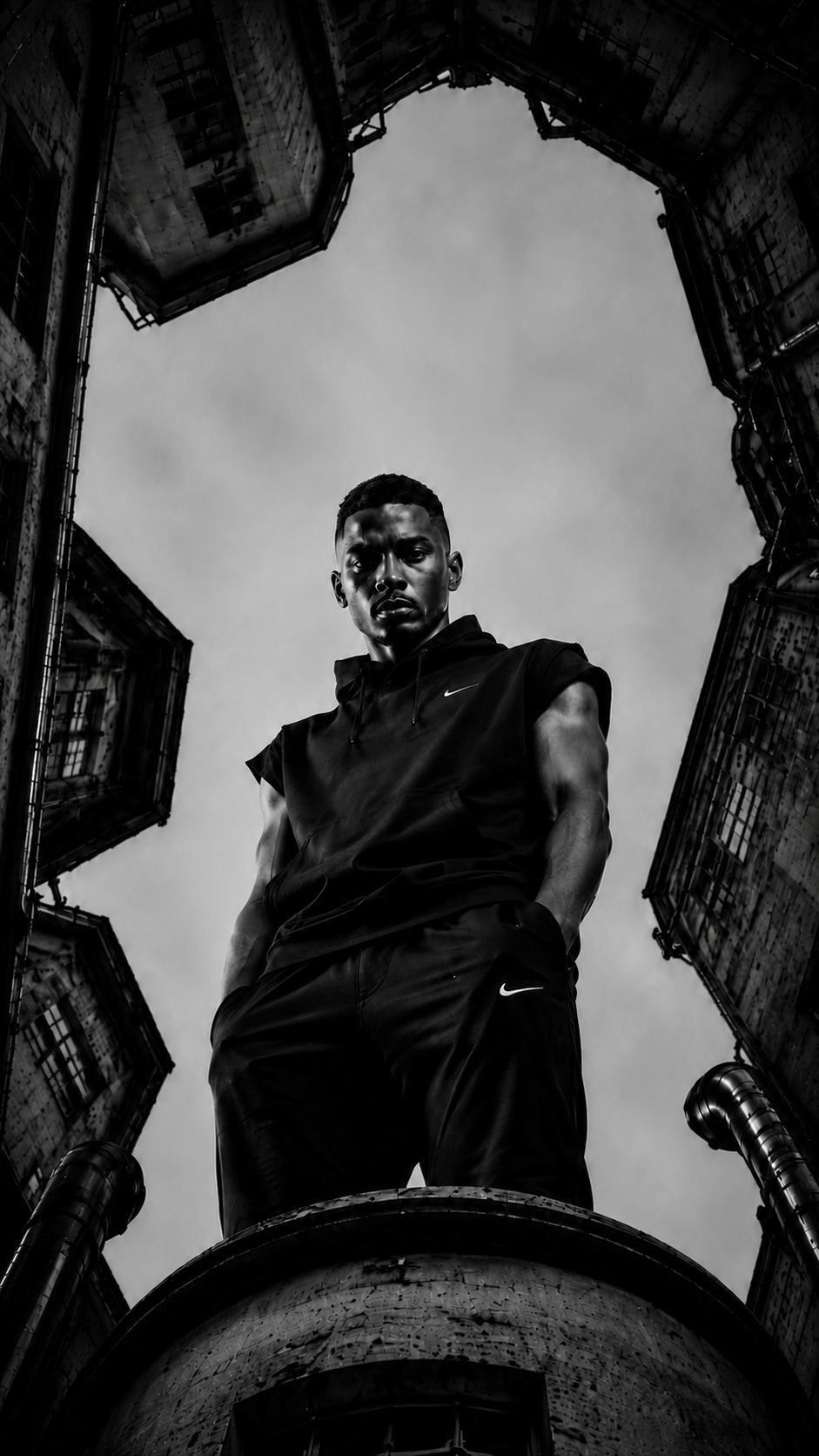
MJ Perkins Studio created an AI-assisted proof of concept to demonstrate the movement from buried potential to remembered identity through camera movement, scale reversal and tonal progression.
The prototype establishes the vision. It is not the proposed final production method.
We built the vision digitally. The proposal is to now shoot it physically—with real athletes, real locations and a custom in-camera system.
MJ Perkins Studio proposes developing and producing the first live-action chapter in Los Angeles. The city gives us authentic access to basketball, running, skate, dance and training culture alongside dramatically different urban environments.
The LA film would establish the practical rig, visual language and repeatable emotional structure: buried, moving, remembering, reawakened.
Concrete, hard light, courts, overpasses and movement. The first chapter proves the complete production system.
Vertical architecture and compressed space. The athlete creates possibility inside a city that offers none freely.
Steel, weather and repetition. Pressure does not consume the athlete; it forms them.
Neighborhood movement against monumental architecture. The athlete claims their own relationship to power.
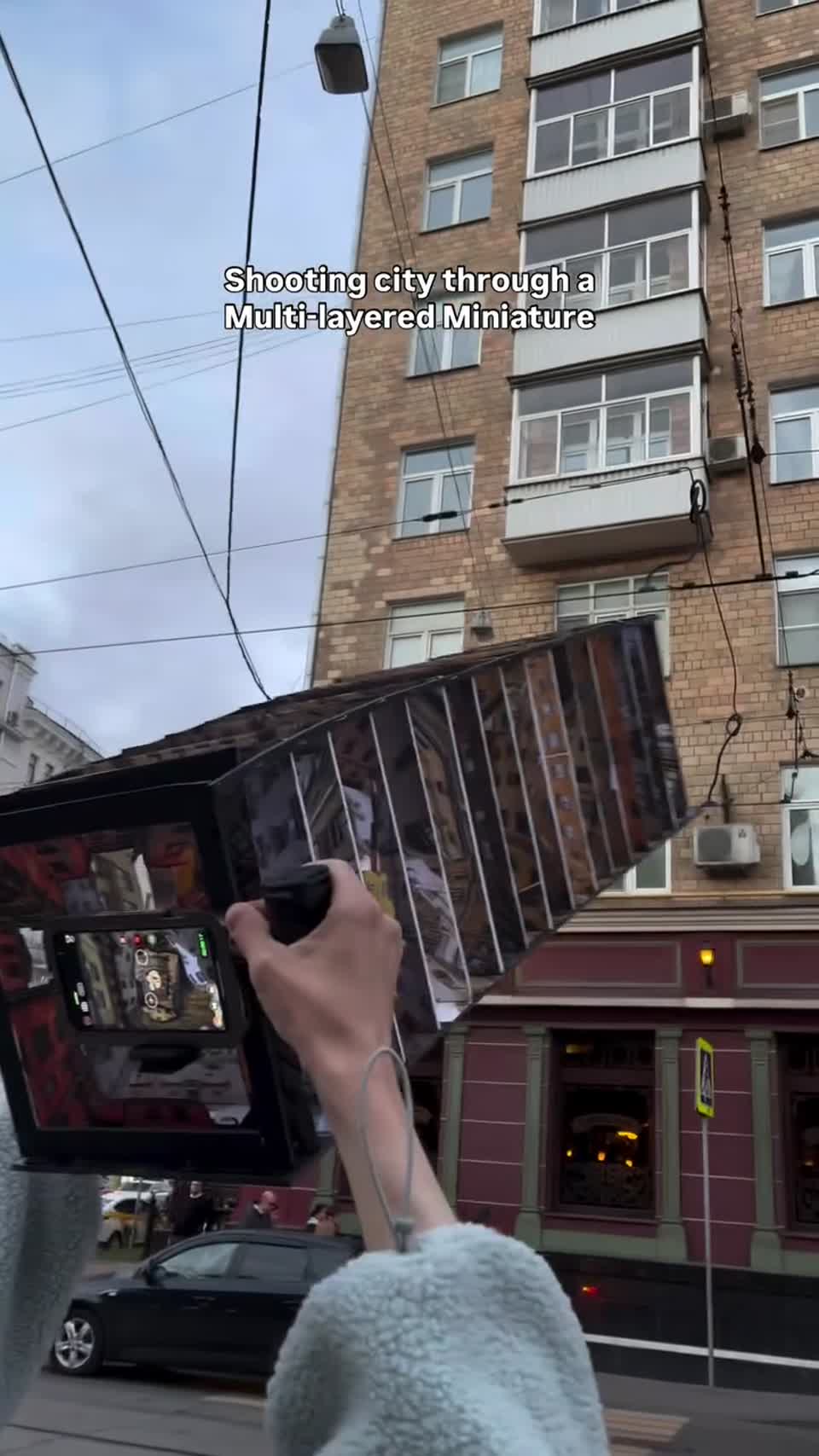
A multi-layer physical miniature sits directly in front of a real location. Camera and rig move together so each depth plane shifts at a different rate, producing genuine optical parallax.
The athlete begins far away, visually buried by architecture, pressure and uncertainty.
The camera advances because the athlete refuses to let circumstance define the final image. This is the Just Do It moment.
As the layers separate, what was hidden comes back into view: the athlete’s strength, position and possibility.
What appeared to define the athlete is revealed as pressure surrounding a person whose identity remained intact.
The image moves from dark and uncertain to crisp, expansive and monumental as recognition returns.
The athlete stands above the world that once appeared to bury them. The campaign line becomes an invitation to move from who they remember themselves to be.
Define category, product, audience, athlete profile, city and music strategy while protecting the campaign’s core truth: people are more than the pressure surrounding them.
Design and test the layered rig against a real Los Angeles location before hero production.
Shoot the first live-action campaign film with real athletes and supporting social deliverables.
Adapt the visual system by city, discipline, athlete and product story without forcing every category into one treatment.
MJ Perkins is a filmmaker, musician, creative director, and multidisciplinary artist exploring the relationship between identity, pressure, and human potential.
His work is built on a single conviction: people are not broken; they are often buried beneath fear, circumstance, and the stories they have come to believe about themselves.
Working across film, music, photography, and brand storytelling, he develops culturally resonant ideas where concept, craft, and execution are inseparable.
The studio gives physical form to invisible human experiences, creating images that reveal what words alone cannot.
For The World Is Yours, the visual language is built around a transformation in perspective.
Pressure takes the form of monumental architecture. Distance communicates doubt. Forward camera movement becomes personal agency.
As the perspective shifts, the athlete does not change. The audience’s understanding of the athlete does.
Partner with MJ Perkins Studio to develop and produce the Los Angeles live-action chapter, establishing a campaign system that helps athletes move from pressure back into identity, possibility and action.
The immediate goal is not to approve a global rollout. It is to align on the right Nike category, product story and audience—then prove the visual system through one exceptional film.
The campaign acknowledges pressure, doubt and delay without glorifying despair. The darkness exists so movement and hope carry real weight.
The athlete does not become valuable because they perform. Movement helps reveal the potential, dignity and identity that pressure temporarily obscured.
The campaign does not stop at inspiration. “Just Do It” becomes the embodied decision to move from remembered identity rather than fear.
The opening suggests the athlete has been buried by the world. The final image reveals the deeper truth: the pressure never erased who they were. Movement simply helped bring that identity back into view.